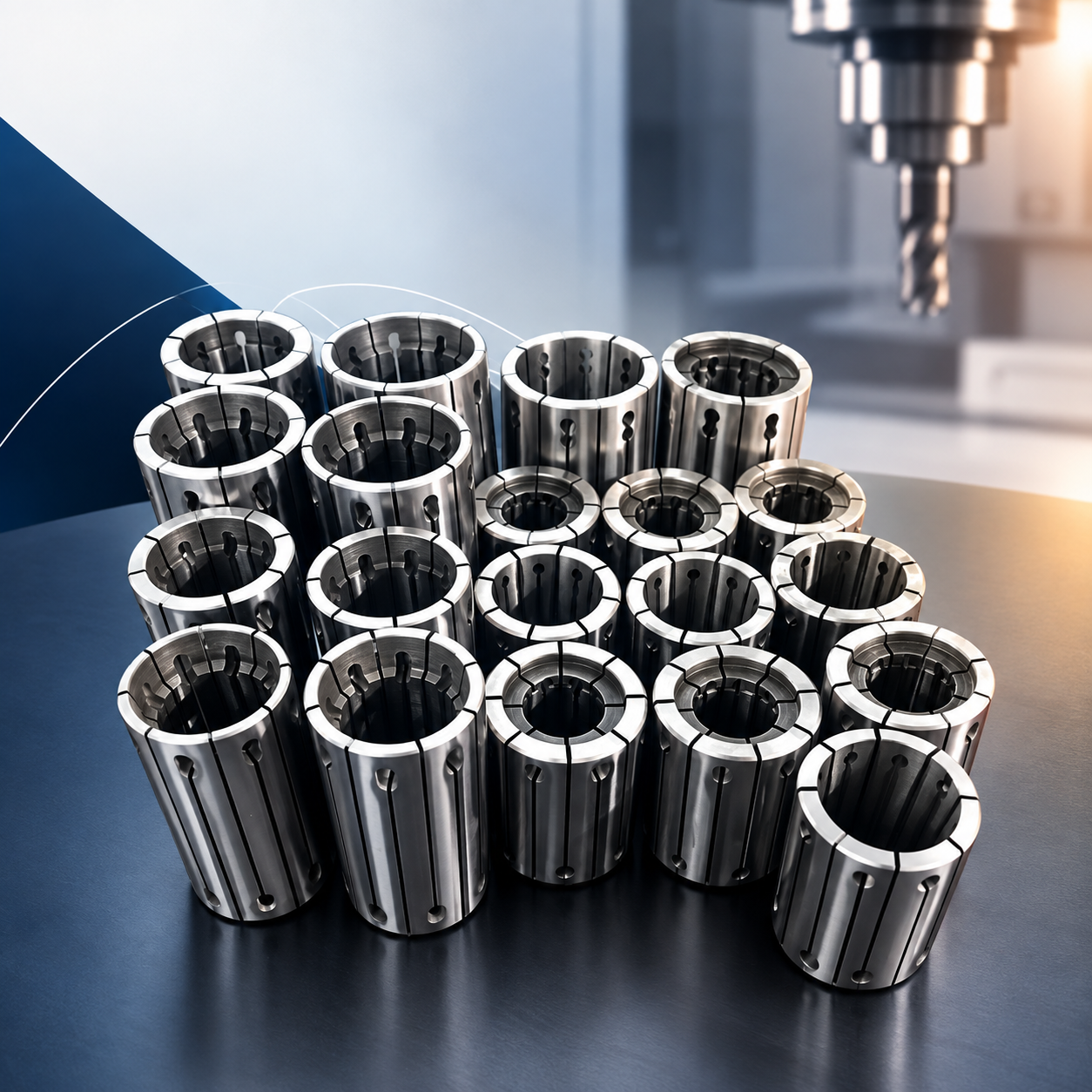
A considerable amount of machining time gets wasted due to problems associated with workholding, even if operators may not realize or would prefer not to. The operation of the machine can get severely affected even if the tool used is a spindle with the suitable tapered expended collet, which matches the material to be machined. With a reputable expended collet manufacturer, nothing else matters.
Why Collet Selection is More Important than Many Realize?
The accuracy of a machine is transferred to the workpiece through the collet. With an off collet, all the precision of the CNC machine does not guarantee parts free from runout, vibration, and out-of-tolerance dimensions.
Operators think that so long as the collet is of the right size, everything will be okay. This, however, causes much more scrapped parts, compared to the wear caused by the tooling.
Common Workholding Mistakes Related to Bad Selection of Collet
The following problems are common and machine-related. However, they are all due to inappropriate selection of collets:
– Part diameter mismatch within a batch due to unstable collet clamping
– Machining marks due to machine vibration and chatter
– Premature collet failure resulting from grip range selection not within the intended stock diameter
– Grip failure during the cutting of hard alloys at high speeds.
None of these mistakes happen by chance. They are all related to collet selection.
Criteria of a Properly Selected Collet
It’s important to look at the big picture when selecting a collet. While the cost is important, so are many other factors.
Material Type and Stock
In the case of soft materials and hardened steels or stainless steels, grip pressures are very different. Using standard collets to grip hardened steels would be ineffective because standard collets cannot grip hardened steels.
Taper and Spindle
Even a slight difference in the taper angle of collets affects the transference of forces from the spindle to the workpiece. This is ignored as a reason for premature failure of tools among shops that purchase from undependable collets manufacturers and suppliers.
Size Range and Tolerance
Every collet has a certain clamping range. Lack of grip is the result of overstressed collets.
Impact of Sourcing on Accuracy
While sourcing varies, so does the accuracy. Deviation in specifications in documentation may indicate a slight difference in manufactured tolerances, which, in turn, may strongly affect collet behavior under loads.
In contrast, sourcing through reliable expended collets suppliers helps reduce the tolerance variation. All new collets will have the same performance as their predecessor, making the time taken for setups consistent.
For reliability, shops will notice that there are variations in cycle times due to changing suppliers. This is due to the variability of the tolerances, not due to a change in the machine.
Practical Signs that You Wear In Your Machine Is Not the Only Problem
More signs might indicate you need to reassess your setups instead of blaming all problems on the wear of your machinery.
These can include:
– Failure of some parts the first time you run your machine, but they fail during the process
– More frequent replacements of your collets compared to the normal
– Heat is generated at the collet’s nose
– Marking on your finished part
Most of the time, addressing at least two of the points leads us to the conclusion that the collets are likely the cause of your problem.
Why Vishal Machine Tools Thinks This Way
Collets by Vishal Machine Tools have tighter dimensions because of the precision needed in the machining process for all the parts of the batch. If you have a .0005” deviance in one of the collets, this will create a tolerance problem in a number of the other parts.
Vishal Machine Tools offers a tailored collet design solution for the varying customer environments. This is especially important for customers who machine various materials in a batch.
How To Come Up With a Working Solution For A Reliable Workholding System?
Determining the cause of the problem is essential. The process of inspecting and replacing the collets is where we find the solution for the overall process.
– Adjust collet performance assessment to certain part tolerances instead of attributing performance loss to wear
– Establish a planned replacement schedule based on cycles as opposed to wear
– Stock some good quality collets from reputable suppliers to facilitate high-precision work
– Record any observed tolerances and determine if the variations correlate to collet life
Adopting this approach turns workholding a consistent and predictable operation.
Closing Thoughts
Workholding issues usually remain hidden. An operator will blame poor results on misalignments and wear of cutting tools. The biggest culprit is a worn collet. Collaborating with an experienced maker of used collets allows shops to develop a control plan used for dealing with the same issue instead of using the trial and error approach.